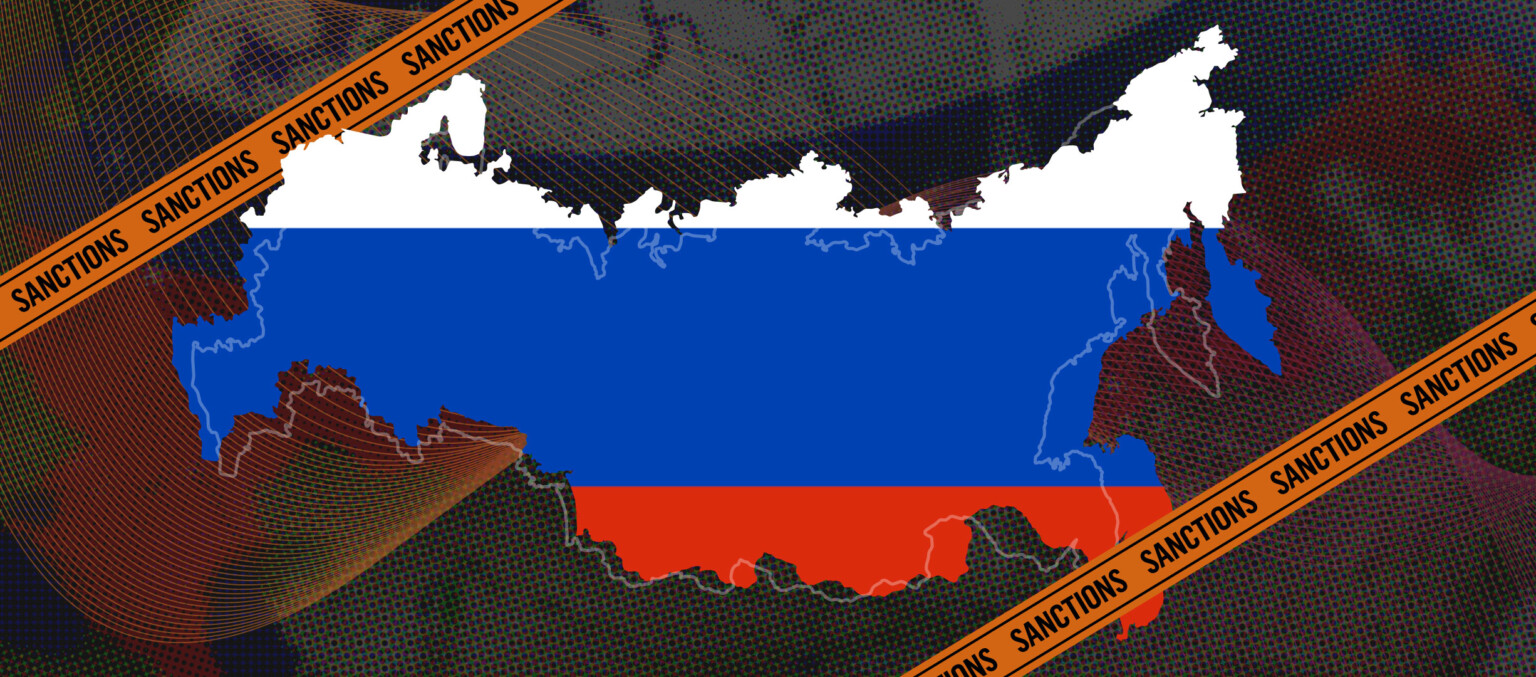
Although they are not often featured in the history we learn in school, sanctions are a common feature of modern warfare as they can provide an effective alternative to martial tactics. In response to the Russian invasion of Ukraine on 24th February 2022, Western nations unveiled significant new economic sanctions against Russia.
In the United States, President Biden vowed to act in conjunction with other G7 nations to impose “devastating packages of sanctions”, whilst Prime Minister Boris Johnson announced that the UK government would be imposing “the largest and most severe package of economic sanctions that Russia has ever seen.” Meanwhile, the EU also moved to sanction Russia: following a summit of EU leaders, Belgian Prime Minister Alexander De Croo described a wide-ranging package of sanctions that would “hurt the Russian economy in its heart”.
Given the severity of the new Russia sanctions and the speed at which they have been deployed, it is crucial that banks and other financial institutions move quickly to understand their new compliance responsibilities and adjust their sanctions screening solutions to reflect the new risk environment.
US Sanctions on Russia
The United States has imposed a sanctions programme against Russia since its invasion of Ukraine in 2014, and in response to Russian efforts to interfere in Western elections via cyber-warfare. The US has also sanctioned Russia over human rights violations against journalists and opposition political leaders.
In response to Russia’s 2022 invasion of Ukraine, the US introduced the following new economic measures:
Asset freezes against four major Russian banks including the State Corporation Bank for Development and Foreign Economic Affairs Vnesheconombank (VEB), and against Promsvyazbank Public Joint Stock Company (PSB) – along with 42 of those banks’ subsidiary organisations. Both institutions are deemed ‘crucial to financing the Russian defence industry’ and hold combined assets worth tens of billions of dollars.
Targeted sanctions against Russian elites and families close to Russian President Vladimir Putin, including:
Aleksandr Vasilievich Bortnikov, director of the Russian Federal Security Service (FSB)
Denis Aleksandrovich Bortnikov, deputy president of Russian state-owned VTB Bank
Petr Mikhailovich Fradkov, chairman of PSB
Vladimir Sergeevich Kiriyenko, CEO of VK Group, the parent company of Russia’s top social media platform, VKontakte
Sergei Vladilenovich Kiriyenko, First Deputy Chief of Staff of the Presidential Office
A range of restrictions on Russia’s sovereign debt, designed to prevent the Russian government from raising money to fund further actions in Ukraine.
A ban on the export of goods and technologies to Russia that could be used to facilitate its hostile actions towards Ukraine.
UK Sanctions on Russia
The UK imposes autonomous sanctions on Russia under the authority of the Russia (Sanctions) (EU Exit) Regulations 2019. Like the US, the UK’s sanctions program was implemented in response to the 2014 invasion, Russian attempts to destabilise Western democracies, and the Russian government’s ongoing human rights violations against journalists and political dissidents.
On 24th February 2022, the UK’s Foreign Secretary, Liz Truss, announced ‘comprehensive’ sanctions against Russia in response to the invasion of Ukraine. The sanctions affect Russian elites, companies and banks, and include:
Asset freezes for Russian banks operating in the UK. The UK government characterised the measure as ‘totally shutting off’ the banking system to Russian institutions.
Prohibitions on Russian state-owned and private companies raising funds or borrowing through UK markets.
Punitive restrictions on exports to and the trade with Russian high-technology and military industries.
A UK airspace ban on Aeroflot, Russia’s national airline.
An ongoing effort to exclude Russia from the SWIFT financial system.
Targeted sanctions, including travel bans and asset freezes, against over 100 companies and individuals at the heart of Vladimir Putin’s regime. These include:
Kirill Shamalov, Vladimir Putin’s son-in-law
Petr Mikhailovich Fradkov, chairman of PSB
Rostec, Russia’s largest defence company
Tactical Missile Corporation, Russia’s largest missile supplier
Uralvagonzavod, a Russian tank manufacturer
A £50,000 limit on Russians making deposits in UK banks.
The UK has said that its Russia sanctions programme will be extended to targets in Belarus in response to their involvement in the invasion of Ukraine.
EU Sanctions on Russia
The EU has kept pace with the US and the UK in imposing sanctions on Russia in response to the 2014 invasion, ongoing political interference in Western democracies, and to human rights violations. On 23rd February 2022, the EU agreed a new package of Russia sanctions in response to the Ukraine invasion. The package includes the following measures:
Sanctions against all 351 members of Russia’s State Duma (the lower house of the Russian parliament). The measure specifically targets the politicians that voted in favour of VladimirPutin’s recognition of the ‘independence’ of Ukraine’s Donetsk and Luhansk regions.
Targeted sanctions, including asset freezes and travel bans, against 27 Russian individuals and entities that the EU has identified as having ‘contributed to the undermining or threatening of the territorial integrity, sovereignty and independence of Ukraine’. Those individuals and entities include:
PSB Bank
VEB Bank
Bank Rossiya
Internet Research Agency
Sergei Shoigu, Russia’s Defence Minister
Igor Shuvalov, Head of VEB Bank
Maria Zaharova, Russian Foreign Ministry spokeswoman
Margarita Simonyan, head of the RT TV news channel
Restrictions on Russian banks and state-owned entities accessing and raising funds in the EU’s financial system.
Restrictions on business relationships with entities in the Russia-controlled Donetsk and Luhansk regions of Ukraine.
Canada Sanctions on Russia
Canada has joined other Western nations in enhancing its existing Russia sanctions regime, which are imposed under the authority of the Special Economic Measures Act (SEMA), the Russia Regulations, and the Ukraine Regulations. The new sanctions, announced on 24th February 2022, add the following measures and restrictions to the existing regime:
Targeted sanctions against 58 Russian individuals and entities. The targets include politicians, oligarchs and their family members, and several Russian financial institutions.
Prohibitions against any business relationships with VEB Bank and PSB Bank.
Sanctions against all 351 members of the Russian State Duma that voted in favour of recognising the ‘independence’ of the Donetsk and Luhansk regions.
Restrictions on all financial dealings with persons in the Donetsk and Luhansk regions.
Restrictions on persons in Canada purchasing Russian sovereign debt.
Future Sanctions
The political and military situation in Ukraine is extremely volatile and it is likely that the sanctions landscape will remain fluid for some time. Banks and financial institutions should prepare to deploy a high level of AML/CFT scrutiny for Russian customers and transactions that involve Russian and Ukrainian counterparts. This means implementing suitable sanctions screening measures, and consulting the relevant international sanctions lists regularly.
Difficulty in Administering Sanctions
The rapid announcement by western governments is impressive, but the implementation will be extremely complex. Russian individuals and companies have been participating heavily in Europe – and particularly in the UK. Before the invasion, Russians had proved adept at using corporate structures and shell companies to obscure ownership. Governments will try to unpick the complexities which will likely ultimately lead to stricter controls on the way companies are created. Banks and others trading internationally should prepare for a rough ride as the situation unfolds.
How can Ripjar help?
It is essential to have a balanced sanctions and watchlist management approach which guarantees 100% adherence to critical global sanctions lists while leveraging other supplementary lists to get a holistic view of risk. Ripjar’s next generation name matching approach has been developed to maximise true matches and minimising false positives – even when that involves matching Cyrillic, Asian and other character sets with Western or Latin names and vice versa.
With the rapidly evolving risk picture, Ripjar’s Adverse Media screening adds another dimension by highlighting potentially exposed customers as soon as they hit the news, with continuous monitoring and identification of risk. Using machine learning data classification, the Ripjar data processing hub can read articles in 21+ languages and a wide range of sources, and identify pertinent risk to enable analysts to review where further action must be taken.
To give yourself the best opportunity to understand and mitigate risks early and in depth, speak to Ripjar about how advanced technology can build a significant commercial advantage.
The Monetary Authority of Singapore (MAS) plays an important role in Singapore’s financial sector. With that in mind, it is important that companies are familiar with Singapore’s AML/CFT laws, and MAS’ expectations in a changing compliance environment.
The city-state of Singapore is a bustling business hub located at the southernmost tip of the Malay peninsula. A historic trading destination for international partners, and a gateway to Asia-Pacific, Singapore is home to thousands of financial service providers. Amongst those businesses are branches of many of the world’s largest international banking organisations and financial service providers, which collectively hold around $2 trillion in assets.
The funds flowing into Singapore have made it a prominent financial centre, but have also made it a target for financial criminals seeking to launder illegal money. Financial crime in Singapore is a significant concern in the city. In 2020, research suggests that the total cost of financial crime in Singapore was $3.81 billion – up from $3.13 billion in 2019.
To address that threat, Singapore’s government established the Monetary Authority of Singapore (MAS) as the city’s financial regulator, responsible for supervising banks, financial institutions and other obligated entities, and for ensuring compliance with the country’s Anti-Money Laundering (AML) and Counter-Financing of Terrorism (CFT) rules.
To help your business manage its compliance risk in Singapore, we’ve put together a list of the top 5 things to know about MAS.
1. What is the Monetary Authority of Singapore?
MAS is Singapore’s central bank and financial regulator. Amongst its duties as a central bank, MAS informs the city-state’s monetary policy, conducts macroeconomic analysis and manages the exchange rate. As a regulator, MAS provides prudential oversight of Singapore’s banks and financial institutions, issuing operating licences, conducting investigations, and ensuring that financial markets remain safe and stable for consumers.
In that supervisory role, MAS also sets Singapore’s financial rules and regulations, publishing new Acts of law and subsidiary legislation in the Government Gazette. MAS also issues new legal directives to financial institutions and sets out official guidelines on best practice standards for regulatory compliance.
Where MAS finds violations of the law, it has the authority to perform enforcement actions. Those actions may entail warnings, suspension of operating licences, business prohibitions, fines, and even prison sentences.
2. How does MAS regulate AML in Singapore?
MAS is responsible for ensuring compliance with Singapore’s financial regulations. The primary article of AML legislation in Singapore is the Corruption, Drug Trafficking and Other Serious Crimes (Confiscation of Benefits) Act (CDSA). Passed in 1992, the CDSA sets out the legal definition of money laundering and requires banks and financial institutions to comply with a range of reporting and record-keeping obligations – in alignment with the guidance set out by the Financial Action Task Force (FATF).
In 2002, Singapore introduced the Terrorism (Suppression of Financing) Act which imposed new financial compliance regulations relating specifically to the counter-financing of terrorism.
3. Recent Regulatory Changes
One of the most significant recent changes to Singapore’s AML/CFT compliance landscape is the introduction of the Payment Services Act (PSA) in 2020. The PSA was implemented to position Singapore for the future of financial services and extends existing AML/CFT regulations to payment systems and payment service providers. In particular, the PSA imposes regulatory requirements on digital payment tokens which, in practice, means that cryptocurrency service providers must comply with Singapore’s AML/CFT laws.
4. How do Companies Achieve MAS AML Compliance?
Singapore is a member of the FATF. Accordingly, the Monetary Authority of Singapore’s requirements for banks and financial institutions include the need to put a risk-based AML compliance solution in place. Risk-based compliance means that each organisation must assess their customers to determine the level of individual risk that they present. Customers that present a higher level of criminal risk should be subject to more rigorous AML/CFT compliance measures, including enhanced due diligence and more intensive screening procedures.
With those considerations in mind, an effective Singapore AML solution should include the following measures:
Customer identification: Financial institutions must establish and verify their customers’ identities by obtaining official documentation such as copies of birth certificates, driving licences, passports, and company incorporation information. Financial institutions should also seek to determine ultimate beneficial ownership (UBO) where a third-party is acting on behalf of another customer.
Transaction monitoring: In order to detect money laundering, financial institutions should monitor their customers’ transactions for suspicious activity, which might include unusual transaction frequencies, transactions that do not match risk assessments or transactions with high risk jurisdictions. Where money laundering is suspected, companies must submit suspicious activity reports (SARs) to MAS in a timely manner.
PEP Screening: Elected officials and other government employees present a high money laundering compliance risk. Accordingly, companies should screen their customers to determine whether they are politically exposed persons (PEP).
Sanctions screening: Companies in Singapore should ensure their customers are not subject to sanctions measures by screening against the relevant sanctions lists.
Adverse media: Financial criminal activity may be reported in the media before it is confirmed by official sources. With that in mind, companies in Singapore should implement an effective adverse media screening solution in order to capture stories involving their customers.
5. MAS Fintech Regulations
The Monetary Authority of Singapore continuously seeks to implement new financial technology as a means to enhance Singapore’s financial system and promote economic growth. With that in mind, MAS has implemented a range of initiatives to help innovative fintech projects thrive in the city’s regulatory environment. Those initiatives include:
The Personal Data Protection Act: The PDPA sets out data compliance obligations for companies handling customer data in Singapore – including what data can be collected, and what it can be used for.
Cryptocurrency Code of Practice: Cryptocurrency service providers that sign up to the code of practice must apply a set of AML/CFT measures adapted for the provision of cryptocurrency services – including due diligence, transaction monitoring, and screening measures.
Technology Risk Management: In 2021, MAS issued an updated version of its Technology Risk Management Guidelines. The guidance focused on the need for corporate leadership to participate in efforts to protect against cyber-threats, and on ways for financial service providers to better manage third-party cyber risks.
Get in touch to learn how Ripjar can help you comply with MAS regulations.
The Swiss Financial Market Supervisory Authority (FINMA) is responsible for regulating Switzerland’s anti-money laundering (AML) and counter-financing of terrorism regulations, and for providing supervision for the country’s banks and financial institutions. FINMA is a prominent international regulatory body: Switzerland’s reputation as a global banking destination stretches back hundreds of years, and Swiss Banks are some of the wealthiest in the world, holding an estimated $6.5 trillion in assets.
FINMA: Background
Switzerland’s banking industry is known for its confidentiality, and has developed a reputation as a destination for criminals attempting to hide illegal money. In particular, criminals have sought to exploit Switzerland’s traditionally-permissive financial anonymity rules and high levels of discretion for banking customers – which include the deployment of technological measures to conceal identities. In 2021, the Tax Justice Network ranked Switzerland at 3 on its Financial Secrecy index, and at 5 on its Corporate Tax Haven index, estimating that money hidden in Swiss banks amounted to over $21 billion. Global regulators have picked up on the financial criminal trends affecting Switzerland, with the Financial Action Task Force (FATF) highlighting numerous AML/CFT deficiencies in its Mutual Evaluation Reports (MER).
In response to the threat to Switzerland’s financial system, and to global financial markets, the Swiss government introduced the Swiss Financial Market Supervisory Authority in 2007. Established under the authority of the Anti-Money Laundering Act (AMLA), FINMA is an independent regulatory body and was a merger of the Federal Office of Private Insurance, the Federal Banking Commission, and the Anti-Money Laundering Control Authority.
What Does FINMA Do?
FINMA has a mandate to ‘supervise banks, insurance companies, financial institutions, collective investment schemes, and their asset managers and fund management companies’, and to ensure ‘that Switzerland’s financial markets function effectively’. In order to achieve those objectives, FINMA engages in the following activities:
Issuing licences: Individuals and companies that wish to engage in financial market activity in Switzerland must obtain an operating licence from FINMA. Different types of licence are available for different types of application, but each involves strict qualification criteria.
Regulatory supervision: FINMA supervises all ‘licensed banks, financial institutions, insurance companies, collective investment schemes and their asset managers and fund management companies’ in Switzerland. Following its mandate, FINMA’s objective is to protect customers from the effects of insolvency or malpractice, and to ensure that Switzerland’s financial markets function effectively.
Implementation of legislation: Where it finds evidence of noncompliance or violations of Swiss law, FINMA has the authority to conduct investigations of the persons involved and ‘use all the means of enforcement available’ under Swiss law to implement the relevant supervisory legislation.
Developing regulations: In addition to its supervisory and enforcement roles, FINMA participates in regulatory projects, under the authority of Switzerland’s Federal Department of Finance (FDF) and the State Secretariat for International Finance (SIF). FINMA engages in regulation in order to meet its supervisory objectives, and issues ordinances and circulars to announce new regulatory rules.
Switzerland’s AML Law
Switzerland’s principle AML/CFT law is the Federal Act on Combating Money Laundering and Terrorist Financing in the Financial Sector, which is also known as the Anti-Money Laundering Act (AMLA). Introduced in 1997, the Act represents the legal basis for combating money laundering in Switzerland, and imposes a variety of reporting, record-keeping, and monitoring obligations on banks and financial service providers.
As a Financial Action Task Force (FATF) member-state, Switzerland’s AML/CFT regulation mandates a risk-based approach. This means that financial service providers in Switzerland must assess the criminal risk that each customer presents, and then deploy a proportionate compliance response, with higher risk customers subject to more intensive AML/CFT measures.
Under AMLA, banks must put the following AML/CFT measures in place:
Customer due diligence: Banks in Switzerland must establish the identities of their customers by requesting certain documentation, including passports, driving licences, birth certificates, and company incorporation documents.
Transaction monitoring: Certain financial behaviour may indicate money laundering activity. Accordingly, banks must monitor customer transactions for suspicious activity and report such activity to FINMA.
Sanctions monitoring: Customers that are subject to international sanctions may seek to use Swiss bank accounts to conceal their connection to illegal money. With that in mind, banks in Switzerland should screen their customers against the relevant sanctions and watchlists, including the Swiss sanctions list, and the United Nations sanctions list.
PEP screening: Elected officials and government employees also pose elevated AML/CFT compliance risks and banks should screen customers to find out if they are politically exposed persons (PEP).
Enhanced due diligence: Since criminals may be drawn to the financial opportunities presented by the Swiss regulatory environment, banks in Switzerland must be prepared to deploy enhanced due diligence measures effectively for high risk customers. Enhanced due diligence involves more rigorous scrutiny of a customer’s identity, including obtaining more detailed identifying documents, performing more intensive checks into business relationships, and establishing the source of customers’ wealth and funds.
Adverse media: Illegal financial activity involving Swiss banks often attracts the attention of investigative journalists – and criminals that use Swiss bank accounts to launder money are often exposed in the media before that information is confirmed by government authorities. With that in mind, banks should integrate adverse media monitoring as part of their AML/CFT solution in order to capture changes to a customer’s risk profile as soon as possible.
It is important for banks to consider the Swiss banking industry’s risk landscape, and adjust their adverse media solution to capture relevant breaking stories quickly and efficiently. Important factors include the geographic source of the media, its credibility, reporting bias, and financial institution’s own risk appetite.
FINMA Recent Developments
In response to concerns about the transparency of its banking system, FINMA has been working to enhance Switzerland’s AML infrastructure.
Mutual Evaluation Report: The FATF’s most recent Mutual Evaluation Report (MER) on Switzerland, released in 2016, outlined several areas of concern, with the following key findings:
The majority of Switzerland’s money laundering risk derives from offences committed abroad.
Many Swiss financial institutions do not implement due diligence measures satisfactorily for existing customers.
The number of suspicious transaction reports generated by Swiss institutions is insufficient, and reports tend to be prompted by external information.
FINMA needs to make further progress in imposing noncompliance sanctions that are sufficiently dissuasive.
In 2020, FATF released an update on Switzerland’s progress in addressing areas of concern raised in the 2016 report. It upgraded Switzerland’s compliance performance in several areas but stressed that more progress was needed.
Cyber-attack reporting obligations: In 2022, the Swiss government indicated that it would introduce an amendment to the Federal Act on Information Security relating to the reporting of cyber-attacks. Under the proposal, banks and financial institutions in Switzerland would be obliged to report cyber-attacks to FINMA with penalties of up to CHF100,000 for noncompliance.
Get in touch to learn how Ripjar can help you with FINMA compliance.
Successful Anti-Money Laundering (AML) and Counter-Financing of Terrorism (CFT) regulations depend on banks and financial service providers understanding the identities of their customers. However, when customers engage with financial services using companies or complex corporate structures, banks must work harder to meet their AML/CFT obligations by establishing ultimate beneficial ownership.
What is Ultimate Beneficial Ownership?
An ultimate beneficial owner (UBO) is the real person (sometimes referred to as ‘natural person’) who owns or controls a customer account at a bank or financial service provider. In this context, natural persons are distinct from ‘legal persons’ which refers to entities like companies. Ultimate beneficial ownership becomes an AML risk factor when banks do business with customer-entities such as companies or with individuals that are not going to be the beneficiaries of a given transaction.
Ultimate beneficial ownership is a significant AML concern in jurisdictions around the world. The Financial Action Task Force (FATF) defines a UBO as:
“the natural person(s) who ultimately owns or controls a customer and/or the natural person on whose behalf a transaction is being conducted. It also includes those persons who exercise ultimate effective control over a legal person or arrangement.”
In this context, FATF considers a natural person to be a beneficial owner if that person meets any of the following criteria:
Owns 25% of an entity’s capital or share capital.
Has 25% or more of an entity’s voting rights.
Is the legal guardian of a customer who is a minor.
Has power of attorney over the customer.
Is a holder of anonymous bearer shares in a company.
Is a corporate director specifically appointed to conceal a true owner.
UBOs and the FATF ‘Travel Rule’
Following a consultation in 2021, the FATF is considering amendments to Recommendation 24 as it pertains to ultimate beneficial ownership. Known as the ‘Travel Rule’, Recommendation 24 requires financial service providers to share information about the originators and beneficiaries of transactions in order to inform AML/CFT compliance.
The proposed UBO revisions, outlined in 2021, would require banks and other financial institutions to:
Retain beneficial ownership information in a registry (or alternative mechanism).
Ensure that beneficial ownership information is ‘adequate, accurate, and up to date’ and “sufficient to identify the natural person(s) who are the beneficial owner(s)”.
In order to determine beneficial ownership, the FATF suggests that service providers should acquire certain basic points of information, including ‘at a minimum’ details of the company’s ‘legal ownership and control structure.’ The FATF also emphasised the need for ‘the widest possible range of international cooperation’ in order for service providers to be able to identify UBOs quickly and efficiently.
Ultimate Beneficial Ownership and AML
UBOs can present such a high level of AML risk because they may use corporate infrastructure to conceal the true nature of their business, or their identities in order to avoid the scrutiny of compliance controls. FATF sets out AML guidance relating to ultimate beneficial ownership in Recommendation 24 – which requires member-states to “take measures to prevent the misuse of legal persons for money laundering or terrorism financing”.
Following FATF guidance, when individual customers are involved in transactions, financial service providers establish their identities by performing suitable due diligence and requesting official documentation such as birth certificate, driver’s licence, or passport. However, where a customer is a company or corporate entity, it is not possible to establish identity in the same way – and so service providers must establish, and verify, ultimate beneficial ownership in order to properly assess the risk that they face.
UBO and Shell Companies
One of the most common criminal threats associated with ultimate beneficial ownership is the use of shell companies. While shell companies are often established for legitimate purposes, they are frequently used by money launderers to conceal the identity of their owners, and thwart the scrutiny of AML controls, by exploiting international regulatory disparity and complex corporate infrastructure.
A shell company is a corporate entity that is set up to protect or hide the assets of another person or company. Normally established without any physical premises, assets, or even employees, shell companies enable criminals to hide behind corporate infrastructure while they introduce illegal money into the legitimate financial system. In some foreign jurisdictions, shell companies can be set up anonymously – and then used to evade AML scrutiny.
Global AML risks: The scale of global criminal misuse of shell companies has been revealed in the release of confidential documents over the past decade. Notable examples include the Panama Papers in 2016 and the FINCEN Files in 2020, both of which exposed the ways that criminals, including political officials, use shell companies in low regulation international jurisdictions to disguise significant amounts of illegal funds. The Panama Papers leak enabled global authorities to recover $500 million in lost revenue, while the FINCEN Files exposed the complicity of prominent banking institutions in supporting the criminal activity.
Shell companies are not just a foreign jurisdictional problem. In the UK, for example, shell companies may be used to open and access bank accounts in other parts of the world, including low regulation jurisdictions – such as the Baltic states.
According to financial crime SME and Director at The Dark Money Files Ltd, Graham Barrow, UK shell companies are a particularly attractive option for international money launderers thanks to new rules which have prompted a move away from the “old fashioned way of forming a company” – by post to Companies House – and towards “an online portal where, in minutes, at a cost of a mere £12, anyone, anywhere in the world can become the owner of their own business”
“While without a doubt it has encouraged much positive economic activity,” said Barrow “it has also attracted a shady side of the global economy – dark money. Money of uncertain, possibly corrupt, or criminal origin”.
The scale of that dark money threat has prompted regulatory responses. Law enforcement authorities around the world, for example, have used the information revealed by the Panama Papers and FINCEN Files leaks to initiate investigations of the individuals and organisations involved, resulting in multiple criminal prosecutions.
Ultimate Beneficial Ownership AML Red Flags
In order to identify potential money laundering activities, including the misuse of shell companies, organisations should be vigilant for the following UBO red flags:
Customers that provide insufficient or incomplete information about the beneficiaries of their transactions.
Companies that send wire transfers with unusual frequency or to an unusual number of beneficiaries.
Companies that engage in transactions that seem unusual for their industrial sector.
Companies that engage in transactions irregularly or only sporadically.
Transactions in amounts that are not typical of a company’s wealth profile.
Transactions that involve sender or beneficiary companies in off-shore locations or in high risk AML jurisdictions.
Payments which may not be traced to bank accounts and which are only traceable via reference to a company invoice or contract.
Compliance technology: Using these red flags to stop criminal activity should be a priority for service providers. With that in mind, sophisticated banks and other organisations are demanding solutions which integrate machine learning and other analytic techniques to unravel and interpret the vast amounts of complex data – generated by sources all over the world – necessary to address UBO concerns.
UBO Regulatory Responses
In the wake of the FINCEN Files and other leaks, governments around the world have implemented dedicated UBO legislations and measures to prevent the misuse of shell companies.
United Kingdom: The UK introduced a register of company beneficial ownership in 2016 with the People with Significant Control (PSC) Register. There are plans to introduce similar beneficial ownership registers for properties and land, and for trusts.
European Union: The EU’s Fourth Anti-Money Laundering Directive required member-states to develop and implement domestic UBO registers. Individual states were permitted to implement the registers via domestic legislation – which had led to inconsistent regulatory environments across the bloc. Latvia is a good example of a country that has put a number of stringent controls in place – as it seeks to improve its reputation after earlier scandals.
United States: In late 2020, the US passed the Corporate Transparency Act which requires organisations across the country to report beneficial ownership information to the government. The law was supposed to come into effect on 1 January 2022 but missed that deadline following administrative delays in 2021.